If you love gardening, odds are you have a deep appreciation for other beautiful things, too. My own love for digging in the dirt came from my mother. She loved her gardens, but that wasn’t the only canvas she made beautiful. She could have easily rivaled the best interior decorators; every space she touched looked better by the time she was done with it. There wasn't a craft she couldn't master. She crocheted, knitted, quilted, tatted, painted, and made massive braided wool rugs, just to name a few.
But talents like that don’t just pop up out of nowhere. Like a strong perennial, her roots ran deep, stretching straight back to her mother, Eleanore.
When I named this blog Rooted in Memories, it was stories like these that I had in mind. I knew from the start I didn’t want it to be solely about hostas. While our business is selling plants, my brain is a bit like a sprawling English cottage garden—filled with all sorts of varieties, textures, and unexpected corners, and everything in it is fair game for writing. Because to really understand what makes something bloom, you have to look at the soil it grew from.
My grandmother, the source of all that rich family soil, was the most wonderful person. She stood at a stout four feet, eleven inches, and needed a very thick cushion in the driver's seat just to see over the steering wheel. But don’t let her short stature fool you; she was as tough as they come. In those days, you had to be. Toughness was the only way you survived the Great Depression. My grandparents, Stephen and Eleanore, ran through a succession of businesses trying to make ends meet—a gas station, a restaurant, and even a small grocery store.
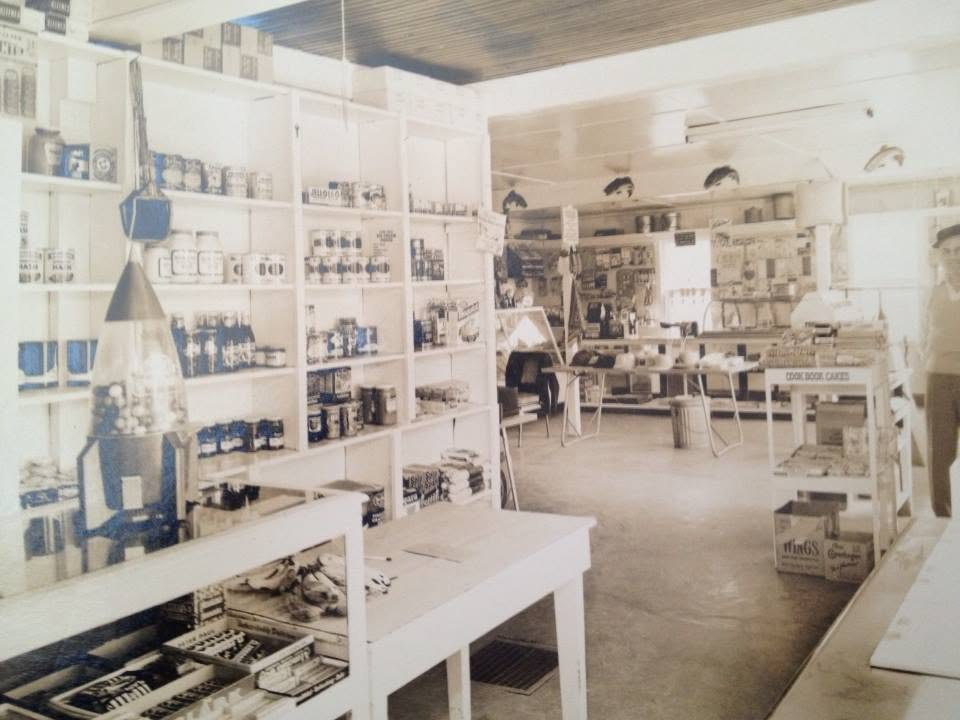
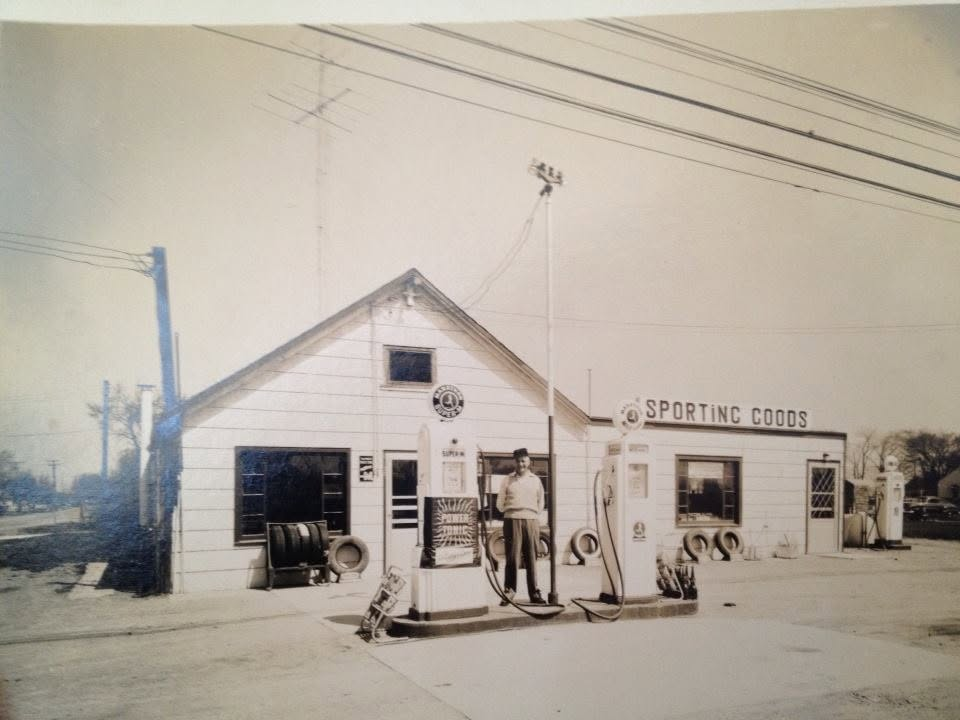
Naturally, my mother was expected to help tend to the family livelihood. She used to tell stories of getting up at four o’clock in the morning, standing on a wooden bucket just so she could reach the sink to wash the restaurant dishes before walking to school. In a household where you mended rather than bought new, she learned to sew out of sheer necessity. They made use of absolutely everything, or they did without. They kept gardens back then, too, but they weren't for leisure; they were food gardens, cultivated because if they didn't grow it, they didn't eat.
Mom told me about one Christmas where there was simply no talk of the holidays. She knew there would be no presents under a tree, so nobody brought it up. Christmas morning came and went silently. Yet, it was that exact climate of scarcity that forced her to cultivate her skills. The things she had to learn to survive were the very things she later transplanted into her hobbies and passions. Her creativity bloomed from the rocky soil of her youth.
That creative bloom followed my grandparents right into retirement when they moved down to a small trailer park in Auburndale, Florida. Grandma Eleanore never really stopped working. She would take the bargain fabric my mother hunted down up north, boxed up, and shipped to her, and she would sew it into beautiful crafts to sell at weekend flea markets. Back then, shipping was cheap—and so was fabric.
But flea markets weren't the only place her talents went. We’d travel down to Florida at least once a year to visit them, usually around Easter, but occasionally we’d brave the unbearably humid month of August. I absolutely loved our weeks down there because my grandmother used that same sewing machine to spoil me rotten. I had two cherished Snoopy dolls, and Grandma meticulously sewed entire wardrobes for them. They had pajamas, a chef’s apron with a big poofy hat, and even little tennis shoes with real laces.
I loved watching her work at her sewing machine. I could sit there for hours, mesmerized by her little arthritic fingers as they flashed across the fabric. She was incredibly fast, efficient, and talented. She made clothes for me, too—dresses, shorts, and shirts all stitched together by her loving, nimble hands.
While Grandma’s fingers were flying across the sewing machine, Grandpa Stephen had a much slower pace. He loved coin collecting. He’d get paper rolls of coins from the bank and sift through them at the kitchen table, peering closely through his magnifying glass. We’d sit together for hours, side-by-side, hunting for elusive wheatie pennies. We could easily spend a whole afternoon at that table, just sorting through copper history.
When we weren't at the table, my sister and I practically lived on their porches. Their trailer had both a front and a back porch; the front was screened in, while the back was glassed. You could open the windows to catch a breeze, though never in August—it was simply too hot. My sister and I slept on a hide-a-bed on that back porch. I still remember the early mornings when the wind blew just right, carrying the most intoxicating scent from the local citrus factory. It smelled incredible, like someone was baking sweet orange bread in a giant oven nearby.
They lived in the very first trailer on a road that led down to a lake. There were maybe twenty trailers in total. My Auntie Linnea and Uncle Eddie lived at the far end, right up against the water, and I spent my days wandering back and forth between the two homes. Auntie Linnea had an organ and loved to play church hymns, while Uncle Eddie would take me fishing. Along the way, I managed to annoy just about every neighbor on the block.
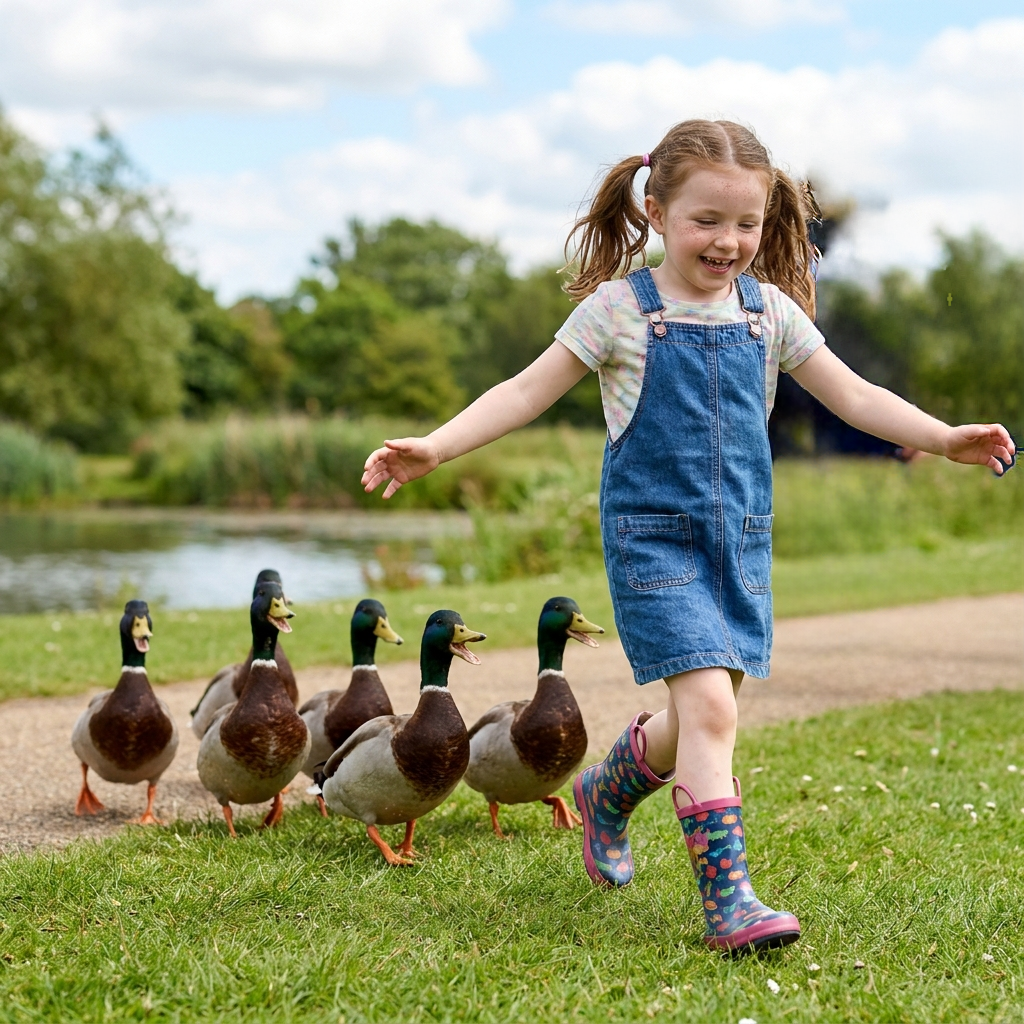
Then, there were the ducks. These weren't your ordinary, peaceful park ducks. They were scary, vicious, blood-sucking creatures that would chase me to no end. I, of course, ran for my life, which only made them chase me harder. Somehow, I managed to avoid getting murdered by a duck, but it was a close call.
The Florida sun wasn't much kinder to me than the ducks. No matter how much sunscreen I slathered on, my skin has only ever possessed two colors: pale, pasty white with freckles, or beat-red sunburn. Thankfully, Auntie Linnea always kept an aloe vera plant nearby—the ultimate living first-aid kit. She’d crack open a thick green leaf and smear that cool, sticky goo all over my back. I don’t know that it actually gave me much relief, though; I remember many nights lying awake, feeling sick to my stomach and feeling the blistering heat still radiating off my bright red skin. By the next day I was blistered and miserable.
But despite the sunburns, the terrifying wildlife, and the minor sunstroke, there was nothing I loved more than being down there with Grandma Eleanore and Grandpa Stephen.
The bittersweet part of having wonderful childhood memories is that we eventually have to grow up. We lose the people who anchored our youth. But for me, keeping these memories alive—revisiting them in vivid detail inside my head—acts as a sanctuary when I need to retreat from the problems of the day.
I think about those times often. While it brings a touch of sadness to know I can never physically relive those moments, sort through pennies at the table, or hug the people who made those summers so special, I find comfort in the perspective it gives me. Just like a garden in the winter, the people may be gone, but what they planted in us remains. I am just incredibly lucky to have had those roots to begin with.

0 Comments