The Story of 'Praying Hands' Hosta: A Church Garden Feud and an Architectural Shade Icon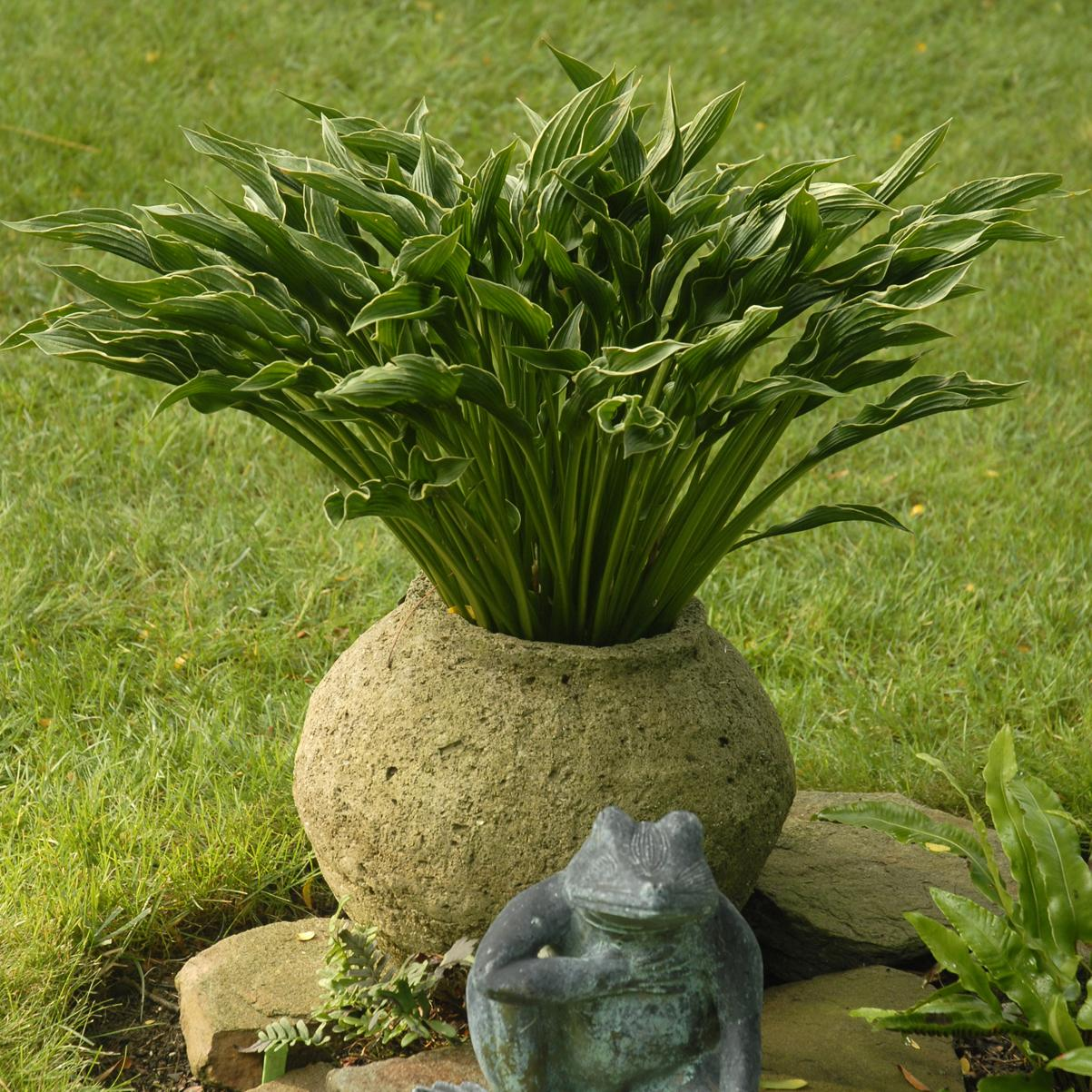
Walters Gardens, Inc.
Of all the hosta varieties that fill our shade beds and nursery tables every season, few evoke immediate double-takes quite like Hosta 'Praying Hands'.
Most hostas announce themselves with expansive, broad, heart-shaped leaves that stretch outward to map out ground cover. 'Praying Hands' does the exact opposite. It reaches upward in a tight, architectural, vase-like form that looks less like a traditional shade plant and more like a botanical sculpture.
Last year, we had a customer drive up to the farm all the way from Northern Illinois. He wasn't casually browsing; he was a man on a very specific mission. He marched right up and asked how many 'Praying Hands' hostas we had in stock. When he ended up loading about ten of them into his vehicle, we had to ask what kind of grand landscaping project he was tackling.
He laughed and shared the story: his church was locked in a long-standing, lighthearted garden feud with another church down the road. Both congregations took immense pride in their curb appeal, trying to outdo one another each spring with tidier borders, richer colors, and healthier perennials.
His master strategy? He was going to plant these ten 'Praying Hands' hostas strategically along the border gardens surrounding his church—så that, quite literally, the entire property would be surrounded by "prayer."
It was one of those moments that reminds us why we love growing plants. Gardening isn't just about soil and light; it's about story, humor, and connection. And if there is any hosta capable of anchoring a story like that, it’s 'Praying Hands'.
What Makes 'Praying Hands' So Unique?
If you were to stand twenty feet away from a bed filled with classic shade plants, 'Praying Hands' would instantly catch your eye. Where standard hosta foliage forms low, spreading mounds of horizontal leaves, this cultivar grows in an upright, narrow, vase-shaped habit that breaks all the rules of traditional shade gardening.
Instead of unfurling flat, each individual leaf is tightly folded inward along its central vein, curving upward with dark olive-green surfaces bordered by a very narrow, delicate cream margin. This unique architecture gives the foliage the unmistakable appearance of hands pressed together in prayer. While the upper surface carries a subtle matte finish, the tightly rolled leaves constantly reveal their undersides. Strikingly glossy and polished-looking, this dual-texture effect creates remarkable depth, shadow, and vertical movement in the garden that few other perennials can manage.
In late summer, slender green-to-reddish scapes rise above the foliage to produce light lavender, tubular flowers. While most growers choose it strictly for its structural foliage, those late-season blooms provide a welcome pop of color and a reliable nectar source for local pollinators and hummingbirds.
The Mystery Behind its Origins
'Praying Hands' was registered in 1996 by Jerry Williams of Minnesota, though its exact parentage remains a botanical mystery.
Hosta historians and experts, such as Mark Zilis, believe it likely originated as a sport—a natural genetic mutation—from a Fortunei type hosta. When it first hit the collector's market, it caused quite a stir because hosta enthusiasts had never seen foliage mutate in quite this manner.
Its extraordinary form quickly carried it from a novelty collector's plant into mainstream horticulture stardom. In 2011, the American Hosta Growers Association awarded it the prestigious Hosta of the Year title, followed in 2012 by the Royal Horticultural Society’s Award of Garden Merit.
Growing and Landscaping Tips
Because of its upright stance, 'Praying Hands' brings much-needed vertical structure into shade gardens that are typically dominated by soft, mounding shapes.
Thanks to its thick leaf texture—often referred to by growers as having "heavy substance"—and its vertical orientation, it is also noticeably more slug-resistant than thinner-leaved cultivars.
Showcasing it effectively in the landscape comes down to placing it where its unique form can be fully appreciated:
- Elevated Plantings: Position it near the top of a stone retaining wall or in raised beds so visitors naturally look down into the cupped, glossy leaf undersides.
- Container Thrillers: Let it anchor a shady patio pot, paired with trailing golden moneywort or sweet potato vine spilling over the edges.
- Textural Contrasts: Weave it alongside broad-leaved blue hostas like 'Halcyon' or fine-textured companions like Japanese painted ferns and astilbe to make the narrow, upright green spikes pop.
Whether you're looking to win a friendly neighborhood rivalry or simply want a conversation starter for your woodland border, 'Praying Hands' is a resilient, medium-sized perennial that delivers year after year.
Hosta 'Praying Hands'. Source: Proven Winners



0 Comments