The "Bad Hair Day" Hostas: A Tribute to Phyllis Diller in the Shade Garden
Disclaimer: As an Amazon Associate, I earn from qualifying purchases.
We all know the traditional hosta aesthetic: noble, smooth, dome-shaped mounds with broad leaves that look like they were pressed, polished, and prepped for a formal photo shoot. They are the tidy, polite foundation of shade design.
And then there are the rest of them—the eccentrics, the rebels, the cultivars that look as though they rolled out of bed, skipped the comb entirely, and decided to embrace total, glorious bedhead. I call them "Bad Hair Day" hostas.
Every time I look at a row of narrow, strap-leafed, heavily ruffled hostas standing alongside their neat and tidy garden neighbors, I’m instantly reminded of the legendary Phyllis Diller.

The Woman Behind the "Fright Wig"
Phyllis Diller built a comedy empire around her wild hair, outrageous clothes, and sharp-witted jokes targeting her own appearance. In an era when female entertainers were expected to be polished starlets, she intentionally turned herself into a caricature—wearing birdcage hats, gloves to hide her hands, and unruly wigs. She used self-deprecation as a shield and a superpower, famously joking, "My photographs don't do me justice—they just look like me." Phyllis turned the crosshairs almost exclusively on herself.
"I'm so ugly... when I was born, the doctor slapped my mother."
"My beauty parlor closes every time I walk in. They pull down the blinds and pray."
"I wear my hair like this because it's cheap and easy. All you do is stick your finger in a light socket."
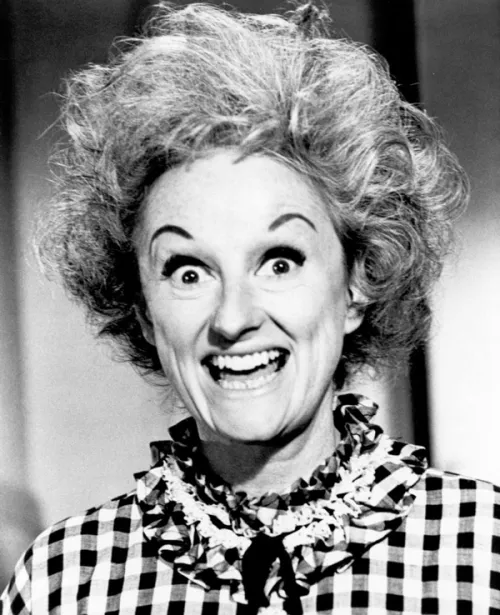
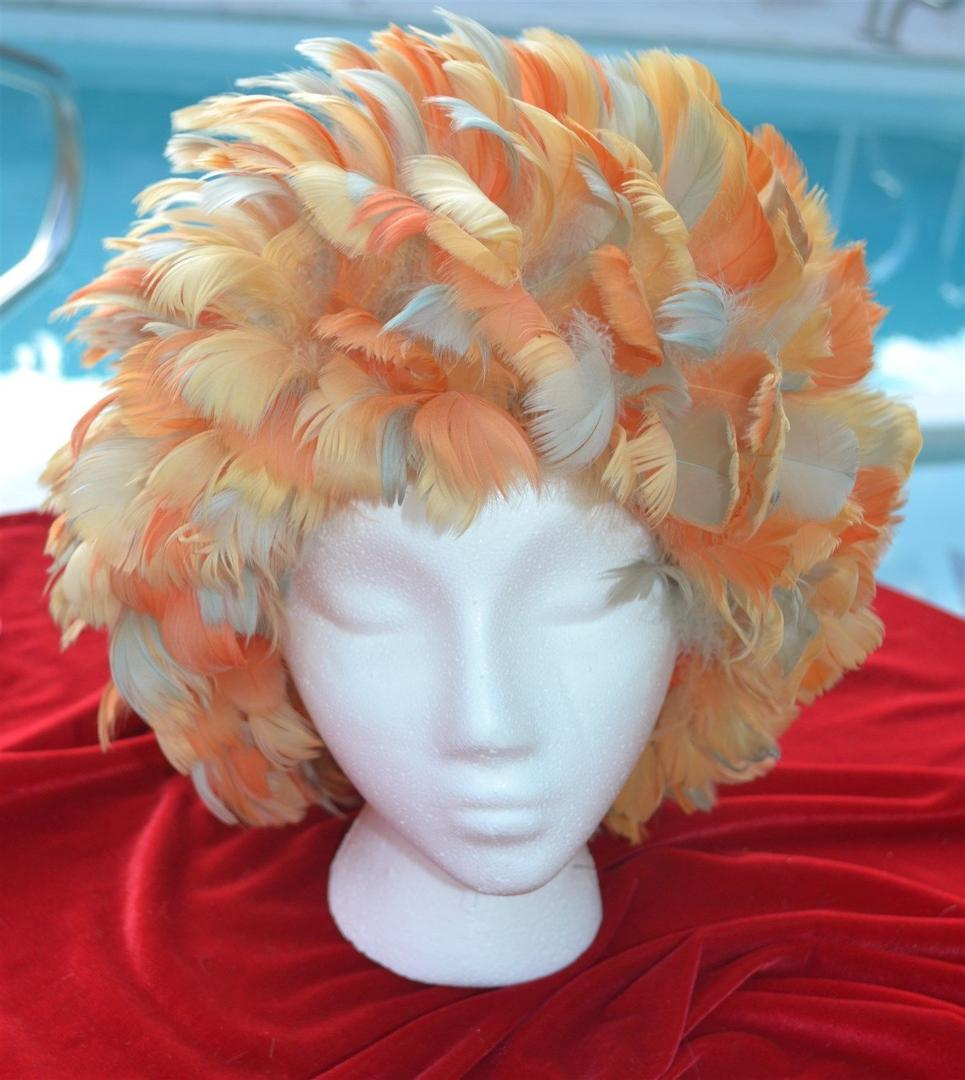
Behind the stage persona was a deeply talented, accomplished woman—a classically trained pianist, a painter, and a trailblazer who entered stand-up comedy as a mother in her late 30s. But that persona was built on a foundation of deep personal pain. She genuinely believed she was not attractive, a private agony that must have been heartbreaking to live with. When she later underwent cosmetic procedures starting in her 50s, she spoke about it with groundbreaking honesty, calling it "a psychic lift, a spiritual lift" that allowed her to take control of her own image.
It is a profound irony to consider. Had she been born in modern times, she likely would have been encouraged to love herself, embrace her natural looks, and reject the cruel metrics of mid-century beauty standards. Yet, we are left with a haunting paradox: that very detest of herself—and the cultural constraints of her era—forced her to weaponize her appearance to be heard. If she had possessed total body acceptance from day one, would she have ever developed the unique, razor-sharp angle that launched her career and made her a legend?
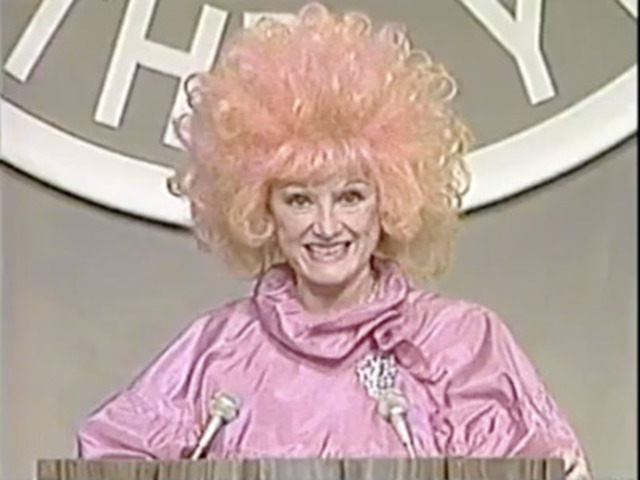
That quiet, bittersweet compromise is perhaps the most enduring legacy she left behind. She figured out how to take the painful, agonizing raw material of her own self-rejection, spin it into gold, and use it to carve out a space where no woman had ever gone before. She had to break her own heart a little bit every night just to make the world laugh, yet she did it with such fierce, blinding intelligence that she ended up changing the cultural landscape forever.
The "Bad Hair Day" Lineup
When you want to bring a little bit of that theatrical, laugh-out-loud charm to your shade borders or containers, these narrow, strap-leafed showstoppers deliver pure personality:
- 'Curly Fries': The quintessential poster child for the "bad hair day" look, featuring thin, highly rippled, arching leaves that look like a mop of blonde curls.
- 'Wiggles and Squiggles': A bright yellow cultivar with long, narrow leaves and intense, dramatic waviness along every single margin, bursting like lightning bolts.
- 'Munchkin Fire': Spiky, upright, and energetic, producing thin, narrow leaves that shoot upward like a short, vibrant tuft of static-charged hair.
- 'Hacksaw': Long, extremely narrow green leaves with heavily serrated, jagged edges that create a sprawling, wild, choppy haircut effect.
- 'Ripple Effect': Twisted leaves with gold centers and thin blue-green margins, featuring an intense wave down each ribbon-like leaf for a windswept bedhead finish.
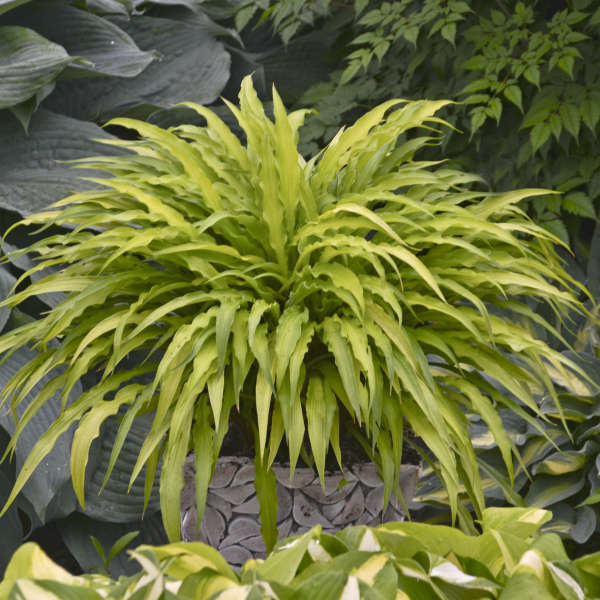 Curly Fries, Photo from Walter’s Gardens
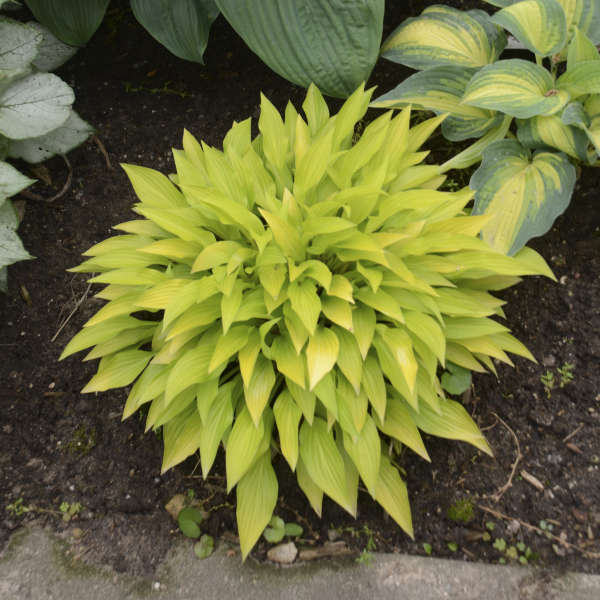 Munchkin Fire, Photo from Walter’s Gardens
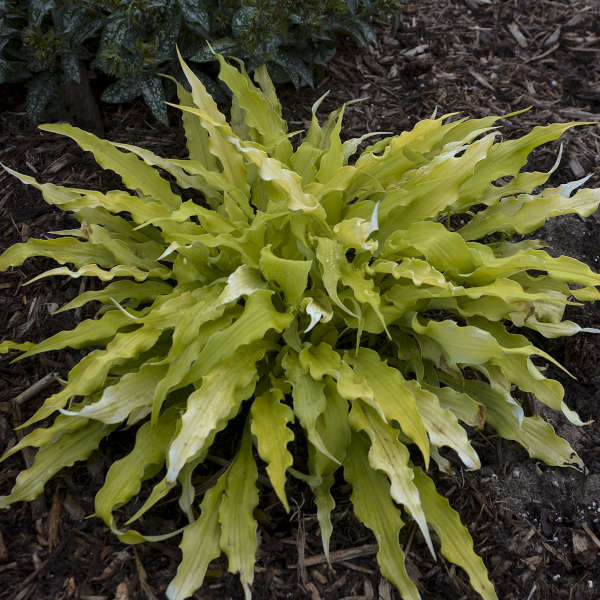
Wiggles & Squiggles, Photo from Walter’s Gardens
Why Your Garden Needs a Little Chaos
In garden design, contrast is everything. If every plant in your shade bed is smooth, round, and symmetrical, the eye gets tired. You need the wild cards—the cultivars that break up the monotony with jagged edges, playful curves, and unexpected silhouettes.
When you look back at it through that lens, those wild, eccentric, "bad hair day" hostas in the garden take on a whole new layer of meaning. They aren't just quirky plants with messy, untamable leaves—they are a tribute to that exact kind of glorious, defiant survival. They refuse to conform to the smooth, polite, perfectly manicured standard, choosing instead to stand out, take up space, and proudly show off every single wild curve they've got.
What about you? Do you lean into the traditional, perfectly manicured look in your garden, or do you have a soft spot for the wild cards, the rebels, and the plants that woke up with total bedhead? Drop a comment below and tell me your favorite eccentric shade-lovers—I'd love to hear what's growing in your garden!
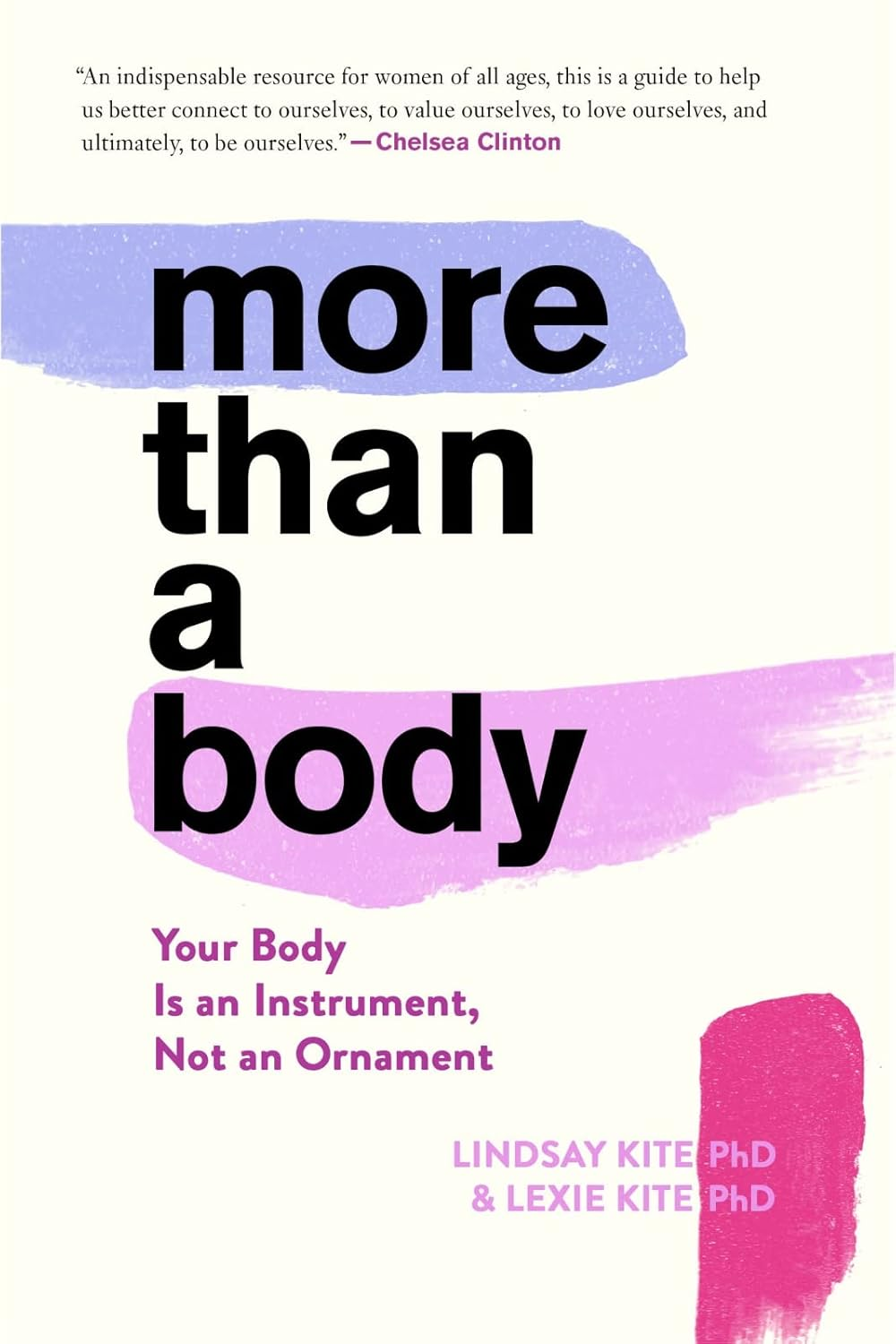
(If you are exploring your own journey toward self-compassion, unlearning harsh inner critics, and breaking free from societal expectations, I've found incredible perspective in reads like The Gifts of Imperfection by Brené Brown and More Than a Body by Lexie and Lindsay Kite—reminders that our worth was never tied to a mirror in the first place.)

Check Price Here on Amazon: https://amzn.to/4i7X9Up
Check Price Here on Amazon: https://amzn.to/3Uv9A2W


0 Comments