A Hosta by Any Other Name… The Psychology of Unique Hosta Varieties and Plant Collecting
As I was planning out the rest of our summer sales and specials, my mind naturally drifted toward July 4th. To honor America’s 250th anniversary, I knew exactly what to do: put our most patriotic-sounding hostas on sale. Currently, we’re carrying 'Old Glory' and 'Patriot', but the list of red-white-and-blue-blooded varieties is vast—'Liberty', 'Minuteman', ‘Independence’, 'Fireworks', and 'American Hero', just to name a few.
Thinking about those names got me reflecting on a broader truth about our obsession with these shade garden plants.
If you were to show a non-gardening friend a collection of hosta varieties without their labels, they would see a lovely, albeit somewhat uniform, sea of green, blue, and gold foliage. They might appreciate the subtle variance in texture or leaf shape, but they wouldn't truly understand the obsession. Yet, the moment you attach those plastic plant tags, something shifts. A simple green plant instantly becomes a character, a story, and a must-have piece of a puzzle.
It makes you realize that so much of our gardening passion isn't just about horticulture—it’s about psychology. The creative, often whimsical names given to hostas tap into a deeply human instinct: the desire to collect, to curate, and to find a piece of our own identity in the things we nurture.
The Power of a Label
We like to think we buy plants purely for their aesthetic value or their hardiness zone. But plant hybridizers are brilliant psychologists. They know that a name triggers an immediate emotional response, whispering directly to our subconscious. These names often perfectly match the plant's unique appearance, or they reflect the playful, eccentric personalities of the growers who bred them.
Take the famous 'Wheee!' hosta. With its intensely ruffled, wavy green leaves, it’s a striking plant on its own. But the name completely changes how we interact with it. It was reportedly named after the joyful sound raindrops make as they slide down its heavily rippled, spiraled edges. The name introduces a sense of playfulness and childhood delight. You don’t just plant it; you smile every time you say it.
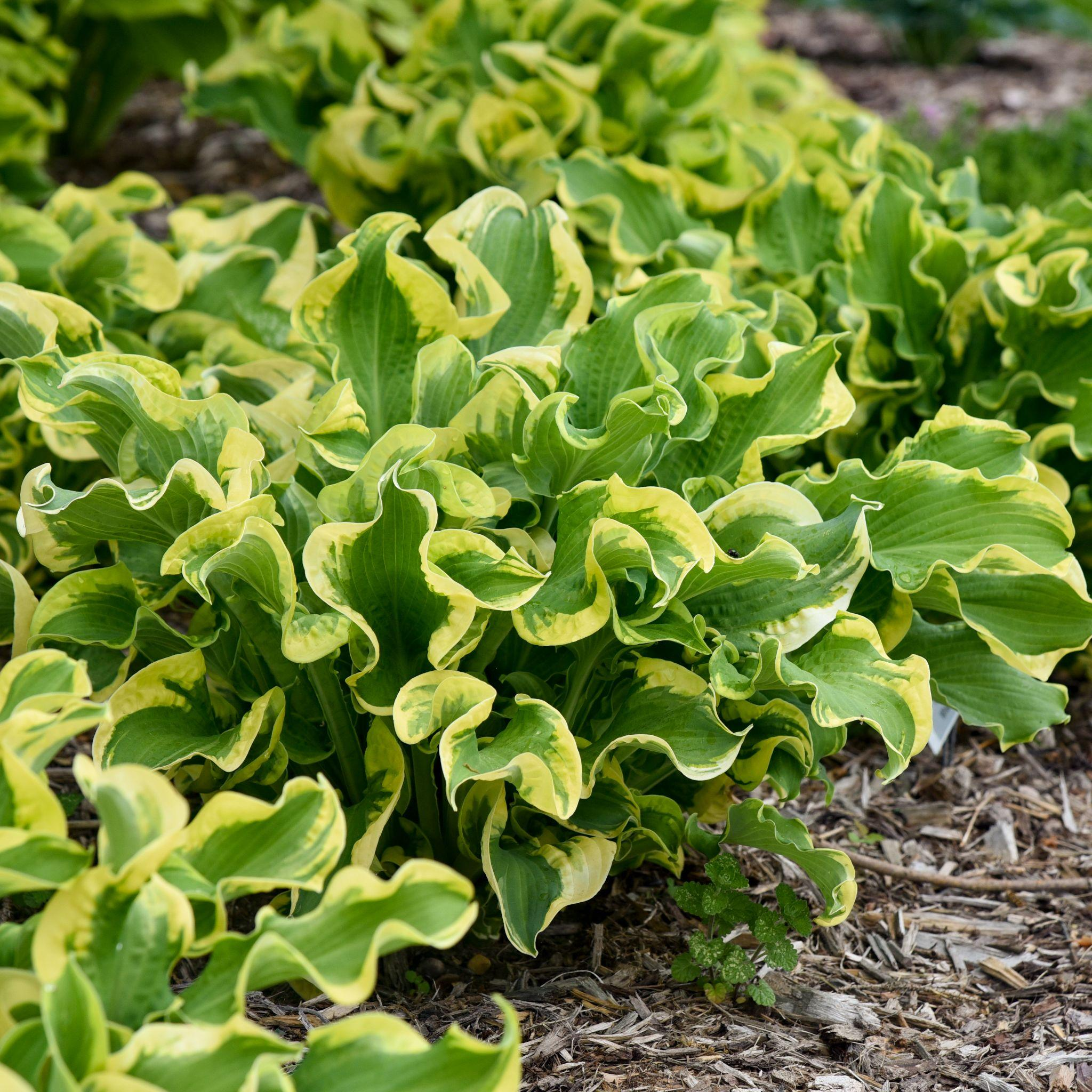
“Wheee!” Walter’s Gardens, Inc.
On the flip side, names can evoke grandeur, history, and drama. When you buy 'Empress Wu', you aren't just buying a large hosta; you are inviting royalty into your yard. This giant was named after the only female emperor in Chinese history, a woman known for her immense power and commanding presence. The name sets a massive expectation for the plant's eventual 4-foot-tall stature, and our brains love that narrative.

“Empress Wu” Walter’s Gardens, Inc.
Sometimes, the name is a literal, beautiful description of form. 'Abiqua Drinking Gourd' is aptly named for its deeply cupped, bowl-shaped, blue-green leaves that literally harvest the morning dew. The "Abiqua" prefix honors the beautiful, historic Abiqua Creek area in Oregon where it first came to be.
Other times, breeders just can't resist a good pun. Take 'Designer Genes'—a brilliant play on words for a hosta that boasts striking, fashionable red petioles (stems) contrasting against bright yellow leaves. They aren't just plants; they're clever conversations waiting to happen.
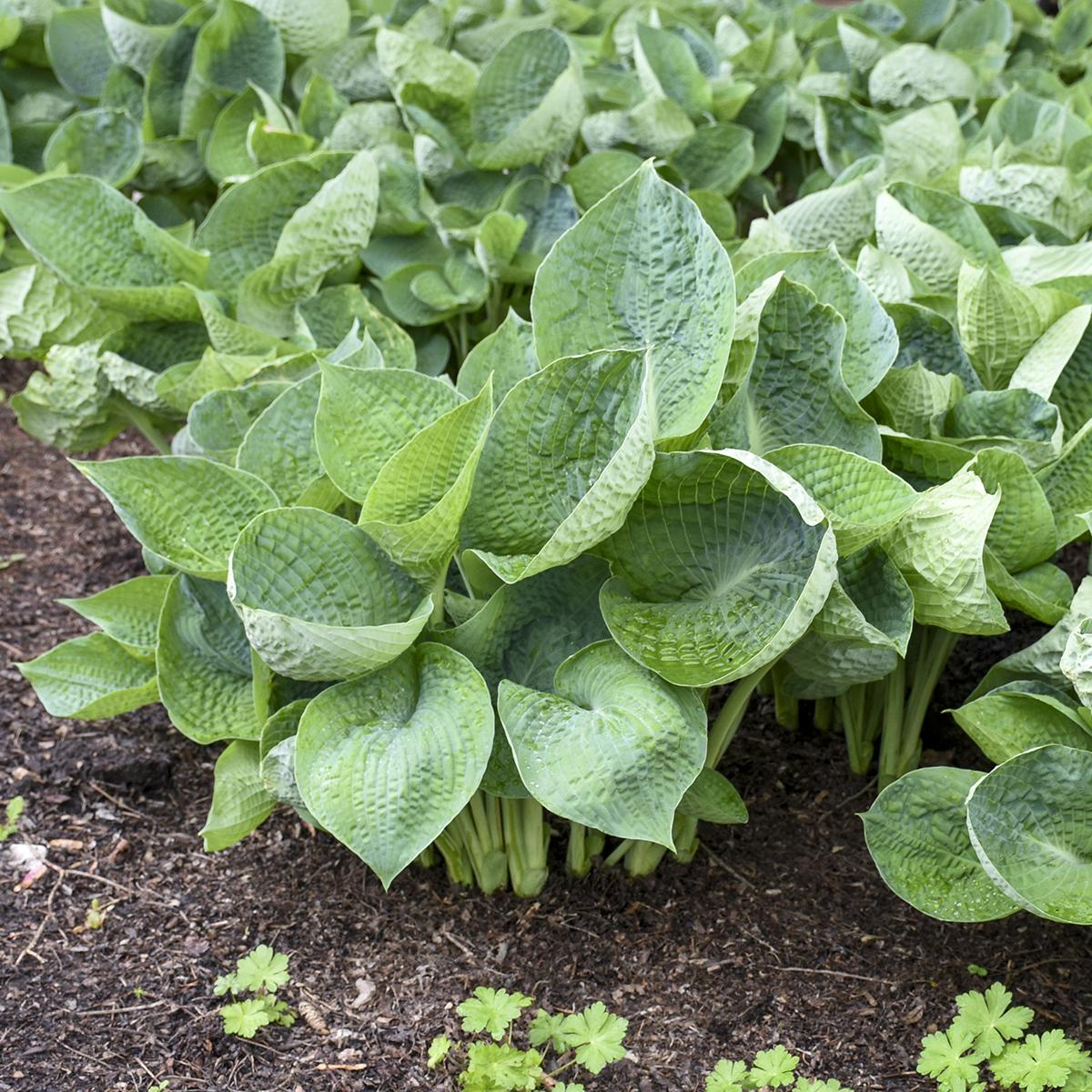
“Abiqua Drinking Gourd” Walter’s Gardens, Inc.
The Collector’s Wormhole: Series and Themes
Where the psychology of naming gets truly fascinating is how it triggers our innate urge to collect. Psychologists have long studied why humans love to gather complete sets of things—whether it's comic books, vinyl records, or, in our case, perennials. A set provides a sense of order, achievement, and comfort.
Hosta breeders have mastered this emotional connection by creating thematic "families" and categories of plants. Once you buy one, your brain subtly registers that the set is incomplete, drawing you deeper into the collector's wormhole:
- The Spiritual Sanctuary: Hostas lend themselves beautifully to themes of reflection, because their names often carry deep symbolic weight. Last year, we had a gentleman drive all the way to the farm from deep in Illinois. He came specifically because we had 'Praying Hands' in stock. As it turned out, he was representing his church, which was locked in a knock-down, drag-out gardening feud with another nearby church over who boasted the most beautiful grounds. 'Praying Hands'—with its uniquely upright, narrow, folded leaves—was the ultimate symbolic secret weapon for their garden war. It’s part of a beautiful, reflective category of hostas that includes varieties like 'Church Mouse', 'Praise Be', 'Holy Mole', and 'Angel Feathers'.
- The Sci-Fi Fanatics: If you are a fan of pop culture, how can you resist a Star Trek themed shade bed? You might start with 'Enterprise', but then you discover 'Vulcan', 'Captain Kirk', and 'Klingon On'. Suddenly, your garden is a sci-fi convention in the dirt.
- The Rodent Kingdom: It all started with 'Blue Mouse Ears', an adorable, rubbery little miniature that became an absolute sensation. Soon, the world wanted a whole mouse house. Then came 'Holy Mouse Ears', 'Frosted Mouse Ears', and 'Mouse Trap'. You don’t just want a cute miniature hosta anymore; you want the whole family.
- The Foodies: From 'Guacamole' and 'Avocado' to 'Fried Bananas' and 'Blueberry Muffin', these names trigger a delightful sensory crossover where we associate the lushness of the plant with our favorite comfort foods.
- The Literary Landscape: For the bookworms, you can turn your shade garden into a walk through classic literature. You can plant 'Great Expectations', channel your inner Shakespeare with 'Othello', pay homage to 'Tom Sawyer', or get lost in the fantasy world of J.R.R. Tolkien with 'Frodo' and 'Gandalf'.
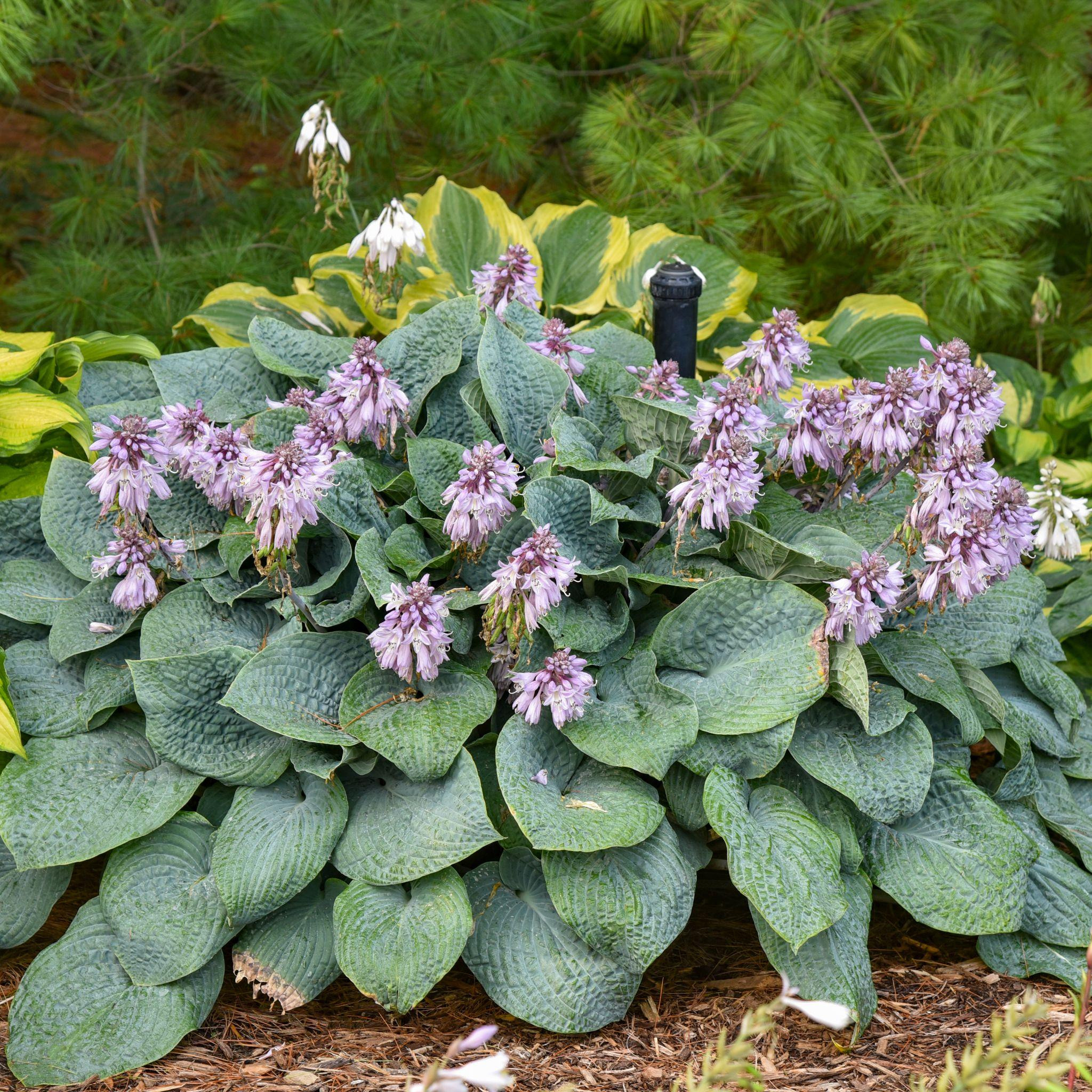
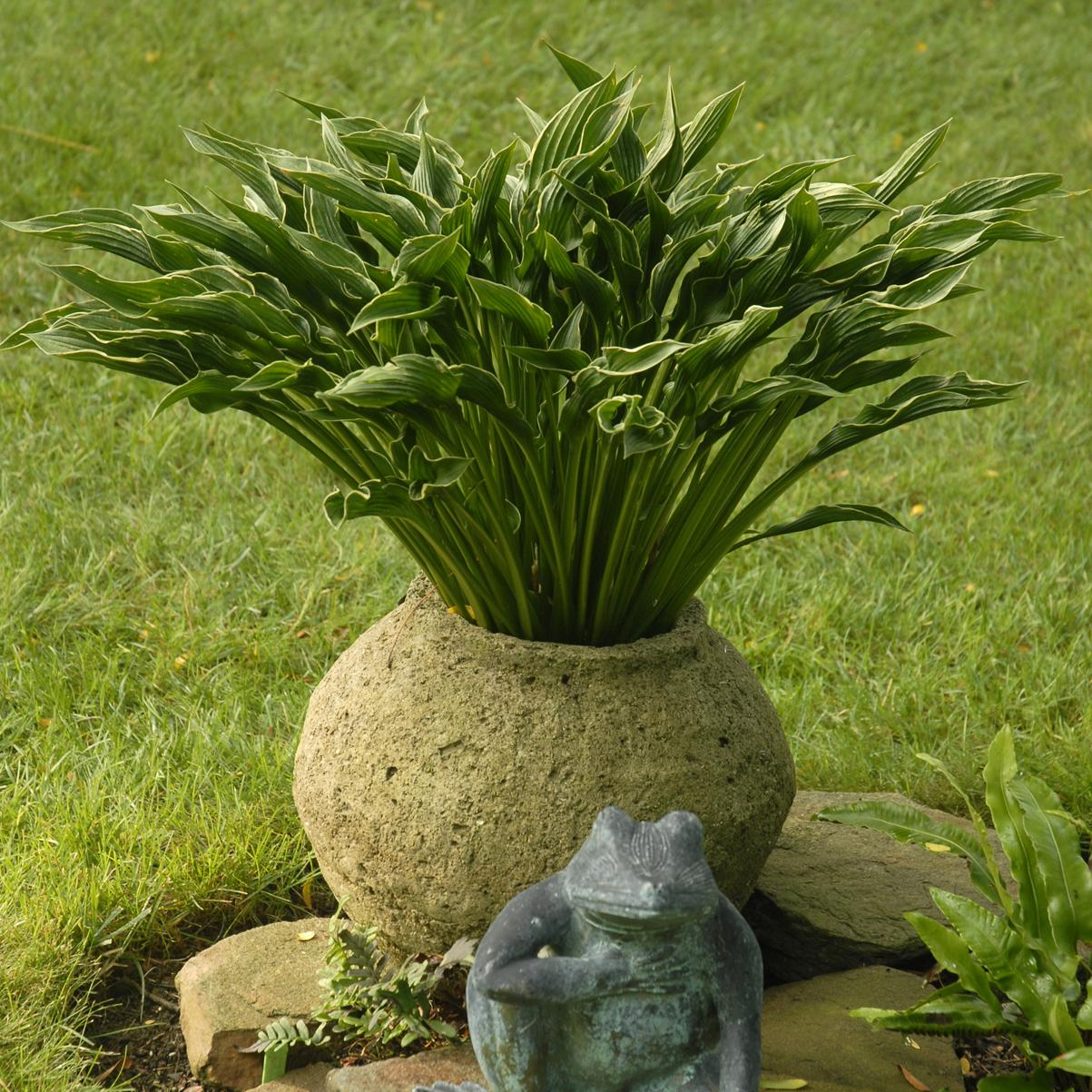
Top: “ Blueberry Muffin” Bottom: “Praying Hands” Walter’s Gardens, Inc.
The Wave of Whimsy
Lately, there has been a brilliant explosion of new hosta names that abandon standard elegance altogether in favor of pure, laugh-out-loud comedy. These are the ones that force you to stop in your tracks at the garden center just to read the tag out loud.
Take 'Frog in My Throat', a hilarious name for a hosta that features a unique, puckered green center surrounded by a gold border—looking for all the world like a little green frog nestled right in the middle. Or consider 'Emperor's New Clothes', a beautifully mottled, highly unusual variety that perfectly plays on the classic fairy tale of showing off something altogether unique and unexpected. When a plant can make you chuckle before it’s even out of its nursery pot, the marketing has done its job.
Perhaps the crown jewel of this bizarrely funny category is a variety named 'Outhouse Delight'. This one starts out in the spring looking like a ghostly, pure white clump of grass before slowly changing over the summer into a wild, messy green-and-white speckled pattern. The grower who created it famously and lovingly described it as "the ugliest hosta in the history of hostas," but plant collectors completely fell in love with it anyway. In fact, it eventually became the parent plant to another hilarious variety named 'Gottago'. It’s the ultimate example of a plant that might not win a traditional beauty pageant, but its laugh-out-loud name makes it an absolute badge of honor for gardeners who love a good conversation piece.
When we buy into these themes and inside jokes, we are doing what humans have done for centuries: we are finding our tribe. We are connecting our outside hobbies with our internal identities.
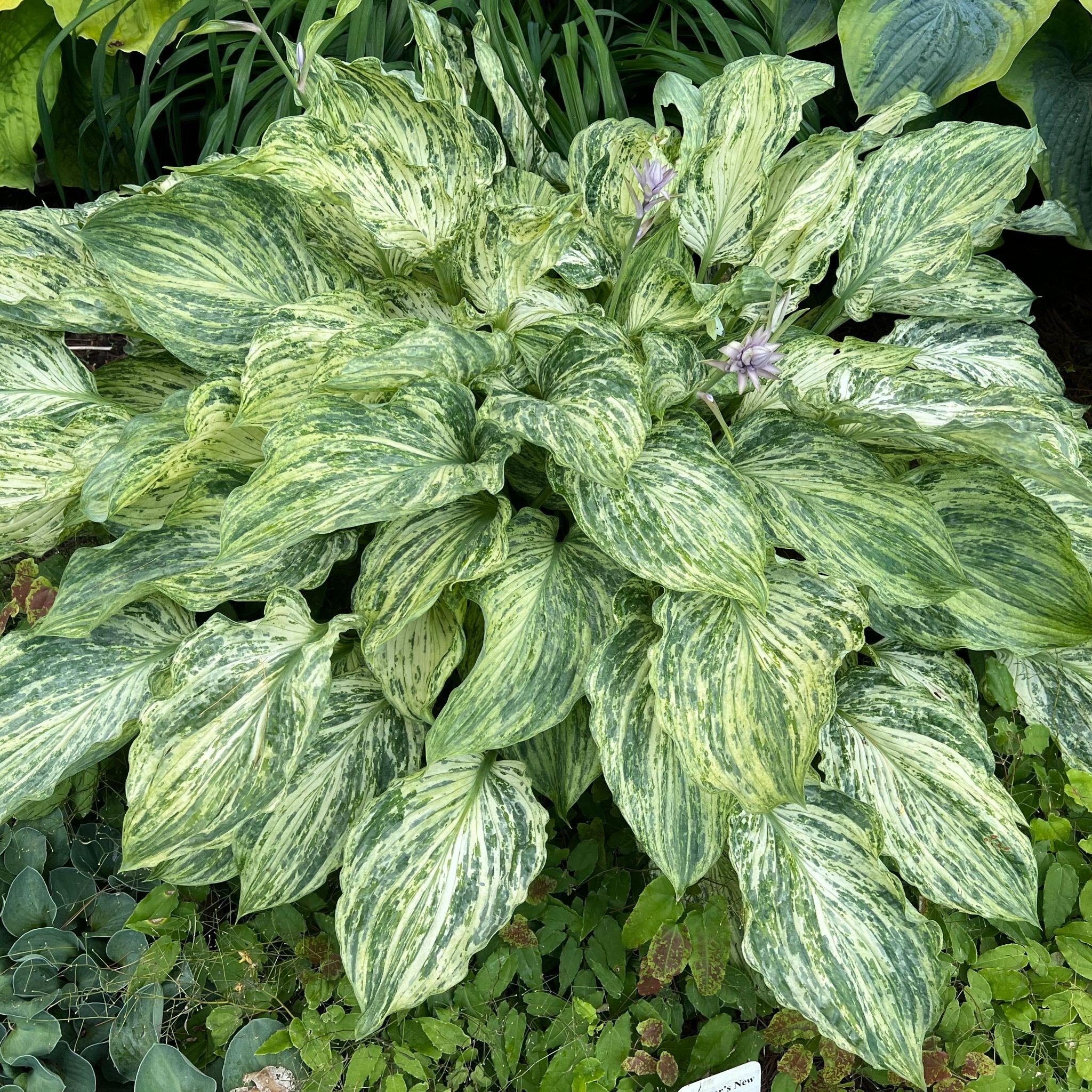
“Emperor’s New Clothes” Walter’s Gardens, Inc.
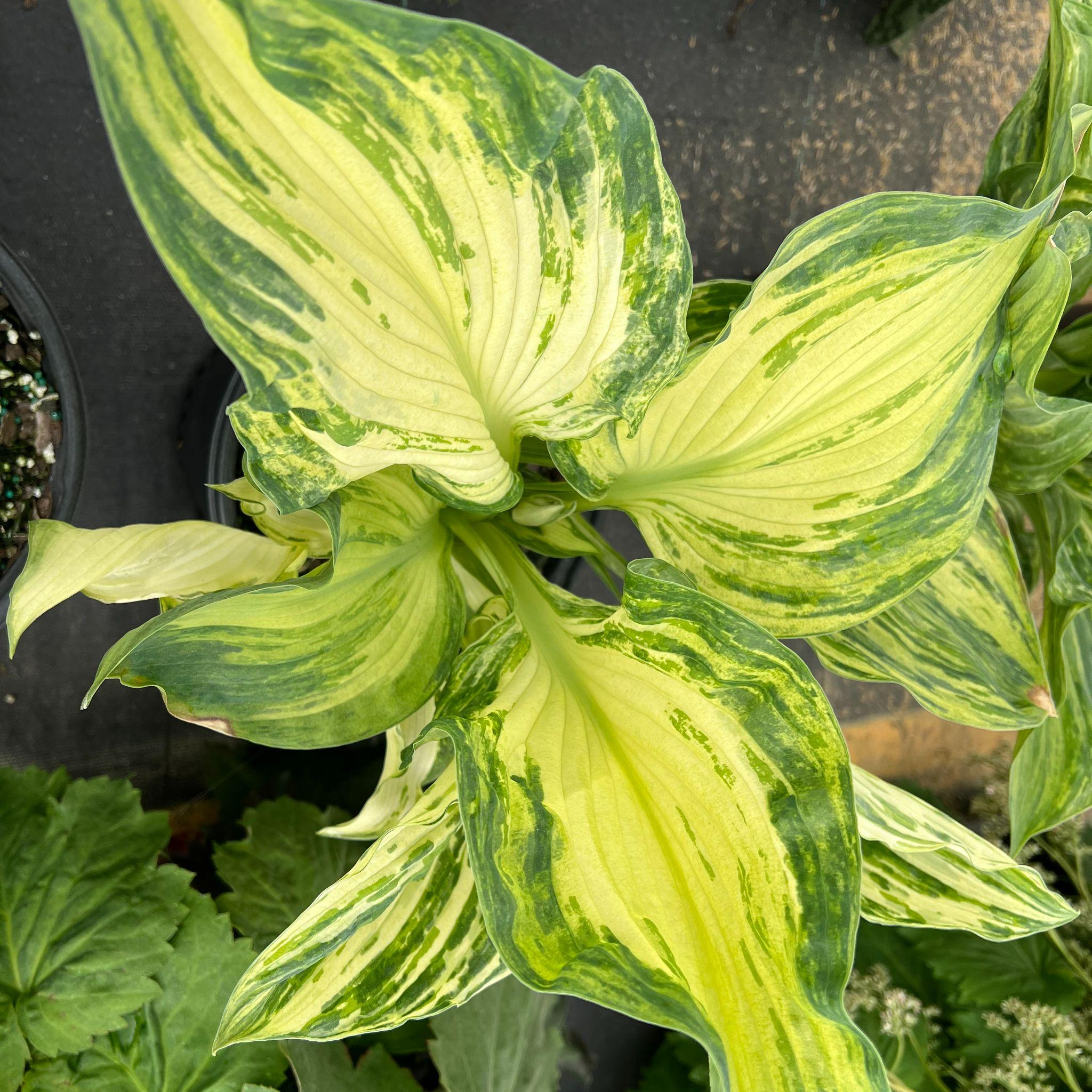
“Frog In My Throat” Walter’s Gardens, Inc.
The Delight of the "Gotta Catch 'Em All" Mentality
There is a beautiful, distinct thrill in hunting down that one specific variety to complete a themed bed. It turns a trip to the nursery into a treasure hunt. Whether you're trying to gather the entire "mouse family," a library of classic books, or a patriotic border for the summer holidays, these names give us a fun, creative framework to design our spaces.
But as any hosta lover knows, what starts as a whimsical name on a plastic tag usually grows into something much deeper.
The true magic happens when the clever names quietly fade into the background and the plants themselves take over. Years from now, you won't just love your 'Stained Glass' hosta because it has a bright name that fits a collection. You’ll love it because you remember a specific, humid July evening when the setting sun hit its translucent yellow center just right, making your entire shade bed look like it was glowing from within. The name got it into the garden, but the plant won your heart.
Finding Harmony in the Shade
There is absolutely no wrong reason to buy a hosta. If a name makes you laugh, reminds you of a favorite movie, or honors a loved one, that is a wonderful reason to bring it home. It’s all part of the joy, the personality, and the storytelling of gardening.
So as we plot out our shade beds this season, let’s absolutely enjoy the clever marketing and collect the "mice," the "spacecraft," or the funny new varieties that bring us joy. But let's also take a moment to appreciate the quiet, green promises waiting beneath those quirky labels—because watching them unfold in our own soil is the best part of the story.
What’s the most uniquely named hosta in your garden? Did you buy it for the look, or did the name hook you first? Let us know in the comments below!




0 Comments