Lessons from a Garden: Lesson 2. Stop Competing.
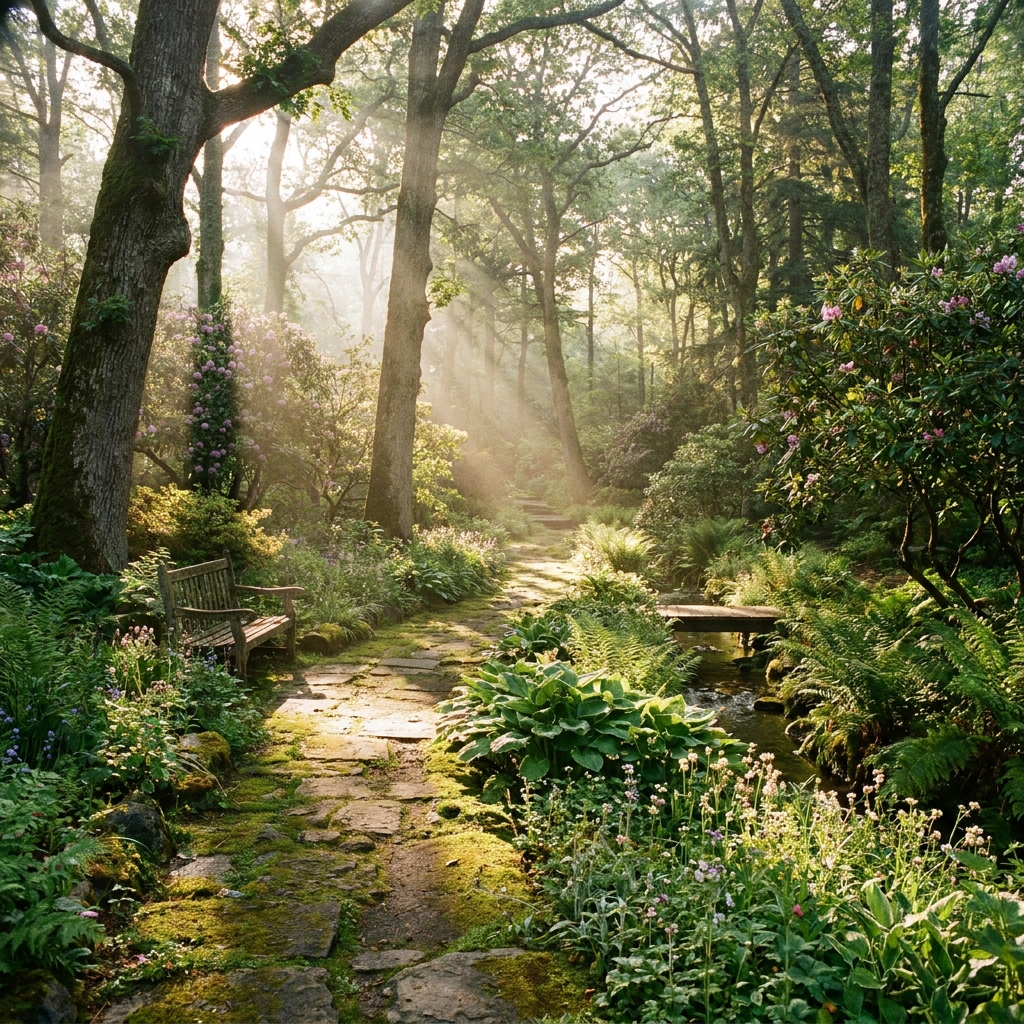
There is a quiet, steady rhythm to a five-acre wooded property in the early days of July. The canopy overhead is thick, filtering the summer sun into dappled patches of light that dance across the forest floor. Down below, in the beds we are lovingly restoring, the hostas are in their full glory. They don't rush, they don't complain, and above all, they do not look at their neighbors.
A Hosta ‘Empress Wu’ does not look over at a delicate ‘Mouse Ears’ tucked near its base and think, I am grander, so I am better. And that tiny ‘Mouse Ears’ doesn’t look up at the massive, blue-green leaves of the Empress and feel inadequate. An ugly flower—if there even is such a thing—does not feel ugly. It doesn’t wither with shame because the bloom two feet away has a more perfect symmetry or a deeper hue.
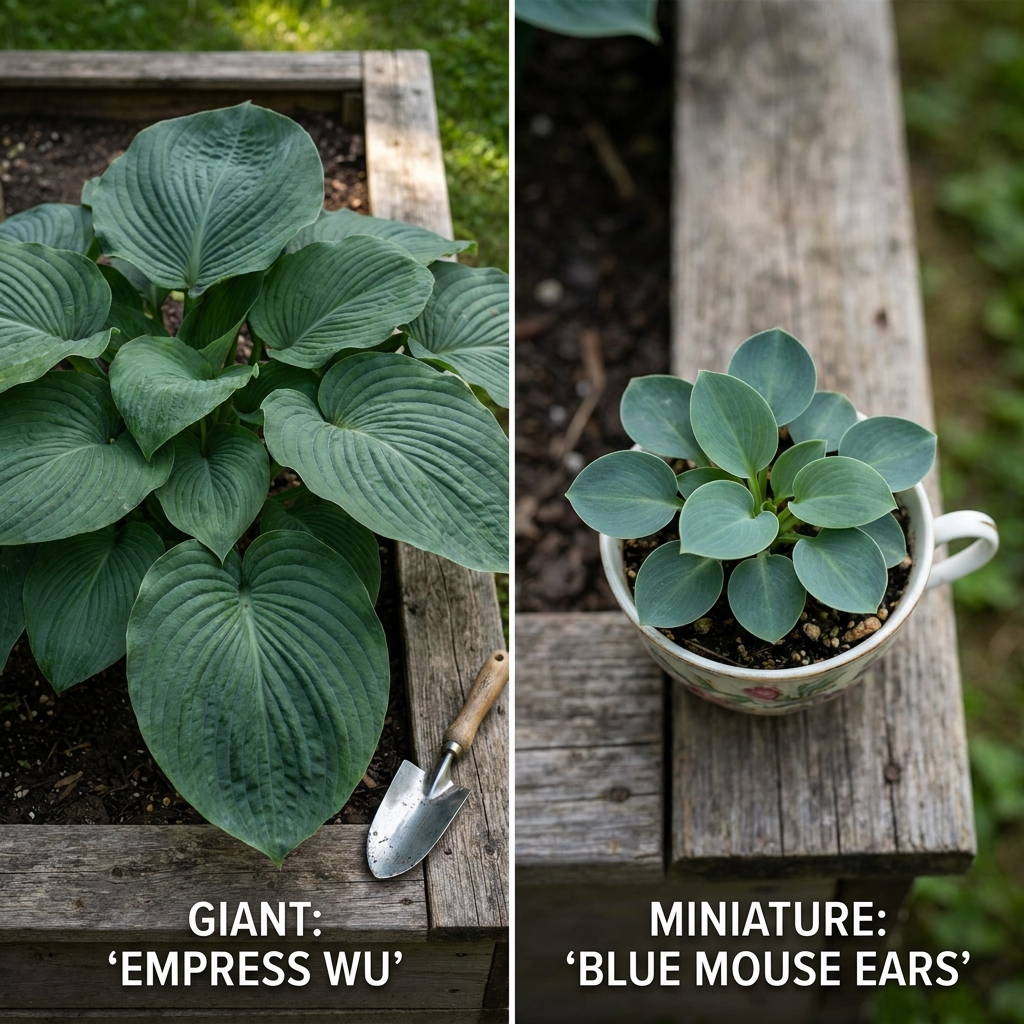
Flowers do not compete. They simply bloom.
In the garden, everything grows according to its own DNA, in its own time, responding to the soil, the water, and the light it is given. Yet, as humans, we seem hardwired to constantly measure our growth against someone else’s yardstick. We look at our neighbors, our colleagues, or even strangers on a screen, and we allow the comparison to steal our joy.
But here is the nuanced truth that the garden teaches us if we sit still long enough to listen: not all competition is toxic. There is a fine, deeply important dividing line between a healthy competitive drive that elevates us, and a comparison trap that leaves us feeling hollow and inadequate.
To understand that line, I often think back to a time long before I was tending these quiet woods full-time, back when my daily landscape was a bustling school system. The very last class I taught before stepping out of the classroom to become a literacy leader was a fourth-grade room in a challenging urban setting. By the time I arrived, those children had already driven away three teachers with their behavior. They were tough, protective, and fiercely committed to testing the boundaries of every adult who walked through the door.
I took over that classroom during Halloween week. And to make matters entirely poetic, it was a full moon.
True to form, they tried to drive me away, too. Every single day was a battle of wits, patience, and endurance. The blood, sweat, and tears were literal. But as the chaos swirled around me, something shifted inside. My innate competitive nature took over.
It wasn't a competition against the children, and it certainly wasn't a competition against the other teachers in the building. It was a fierce, relentless competition with myself. I looked at these beautiful, brilliant children—most of whom were reading at a first- or second-grade level—and I challenged myself to see just how far I could bring them. I competed against the clock, against the statistics, and against my own exhaustion to find new ways to unlock their potential.

By mid-May, when the state testing window opened, the fruits of that labor finally bloomed. Those children closed the achievement gap by a staggering 18% in both reading and math.
That was healthy competition. It was an internal fire that pushed me to be better, to give more, and to rise to an extraordinary occasion. When I looked at the results, the overwhelming feeling wasn’t pride in beating someone else; it was a profound sense of accomplishment. Every tear shed and every late hour spent at that desk had been entirely worth it because it was rooted in growth.
But what happens when the competition doesn't lift you up? What happens when it leaves you feeling like a failure before you’ve even stepped out the door?
That is the other side of the line. When we shift our gaze from our own internal potential to the external world, competition changes shape. It becomes a thief. If the competition you embark on consistently leaves you feeling inadequate, small, or like you are failing to meet an arbitrary standard, then it is simply not worth competing.
In the nursery business, it is incredibly easy to fall into this trap. You look at how fast another grower is expanding, or how many followers another page has, or how pristine someone else’s display beds look. If I let my mind drift into that space, the joy of what Paul and I are building here on our five acres begins to evaporate. The dirt feels heavier, the weeds feel thicker, and the beautiful, slow process of restoring my mother Janzy's old garden beds suddenly feels like a race I’m losing.
But the garden reminds me to look back down at the soil.
When you plant a root division in the ground, it doesn't compare its root system to the established clump next to it. It just pushes through the dark dirt, drinks the rain, and finds the light. It is in competition only with its own survival and its own destiny to become what it was created to be.
Healthy competition focuses inward: Can I be more patient today than I was yesterday? Can I cultivate a more resilient spirit? Can I find a better way to help someone open up and learn? This kind of competition brings fulfillment because the benchmark is your own journey.
Unhealthy competition focuses outward, demanding that you match someone else's highlight reel without ever knowing their soil, their storms, or their roots. It’s a game you can never win, because there will always be a taller tree, a brighter bloom, or a larger farm.
If you find yourself caught in that exhausting cycle today, take a cue from the hostas. Step away from the fence. Stop looking at how fast the neighboring garden is growing. Turn your eyes back to your own dirt. Give yourself the grace to grow in your own season, at your own pace, and in your own unique shape.
You don't need to outshine anyone else to be worthy of the space you take up. You just need to bloom.


0 Comments